The Best Practices in Collecting Customer Data

Digital Fire • January 18, 2021

Customer insights offer an understanding of information such as customer demographic, behaviour, and preferences, which enables businesses to develop high-quality products and positive user experience that will cater to their clients' needs. However, collecting user/customers' personal information isn't enough; a company needs to gather information that is useful and relevant to its business. These are some of the best methods for collecting useful customer information and avoiding potential issues.

Collecting customer information gives businesses a range of benefits, but there is an upper limit to what kinds of information they can gather. Privacy concerns have increased significantly in recent years, and there are various regulations that protect individuals' personal information. Before you start collecting any customer information, let them know what kind of information you're going to collect and why.

  1. Collect identifiers. Collecting identifying information (i. e., names, dates of births, ages, genders, addresses, etc.) is crucial when designing forms for websites. This information will be used to create future analyses and segments.
  2. Track customer interactions Define important customer interactions. If you're running an ecommerce business, you need to know where your visitors came from, which products they looked at, which ones they added to their carts, and which ones they ultimately bought. Understanding each stage of the buyer’s journey will help you understand what your customers want and what they don't know yet.
  3. Collect user behavior-based data. Don't focus solely on customers who made a purchase. Consider what else produces meaningful data. For example, if you're selling products on an ecommerce website, you may want to track how many people signed up for your email list, which pages they viewed on your site, or the amount of time they spend on each page. Evaluating this information will allow you to determine which parts of your business are working well and which ones could use some improvement.
  4. Automate data collection. To gather customer data, you need to minimize the risks of human error. Automating as much of the collecting process as possible is the best way to go. Tools and apps such as online forms and OCR (optical character recognition) feeds information directly into your databases and eliminates paper-based processing that often leads to mistakes.
  5. Integrate your systems. Redundant and erroneous information can be found when several different systems manage the same information. You can avoid these issues by working with a web development company to integrate all your app, database, and software applications. With this method, the same set of information will be stored in multiple databases, which reduces the need for manual input and, thus, decreases errors.
  6. Consider who will view the reports. You'll inevitably need to convert data into useful business insights. You should identify which people will be reading your reports so you can focus on highlighting the most relevant insights for each person. You might be interested in seeing how your company compares to others in terms of sales per employee, revenues per employee, and so forth.
  7. Update data in real time. Companies today must rely on up-to-date data for their business operations. Business Intelligence dash­boards allow you to collect, organi­ze, and filter data at a click of a mouse so that you won't ever have to wait a day to get important infor­mation that can help guide company deci­sions.

Are you looking for technologies that can improve data collection? Call our IT consultants today. We'll recommend best practices for tracking the information you need to grow your business.

Recent Posts
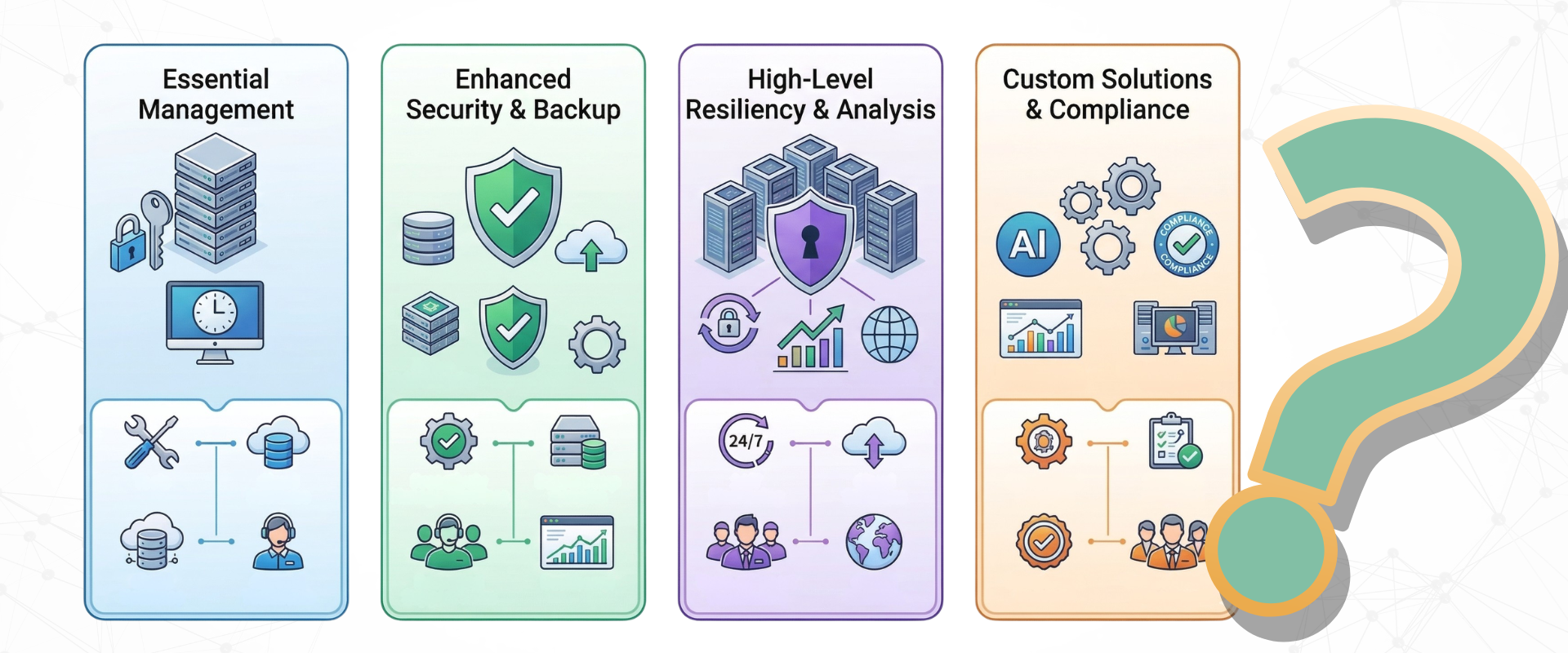
Infographic of four IT service tiers: Essential Management, Enhanced Security, Resiliency, and Custom Solutions.
By Leslie Babel March 31, 2026
Why do some MSPs charge $150 per user while others charge $300? Learn what drives pricing differences in managed IT services.
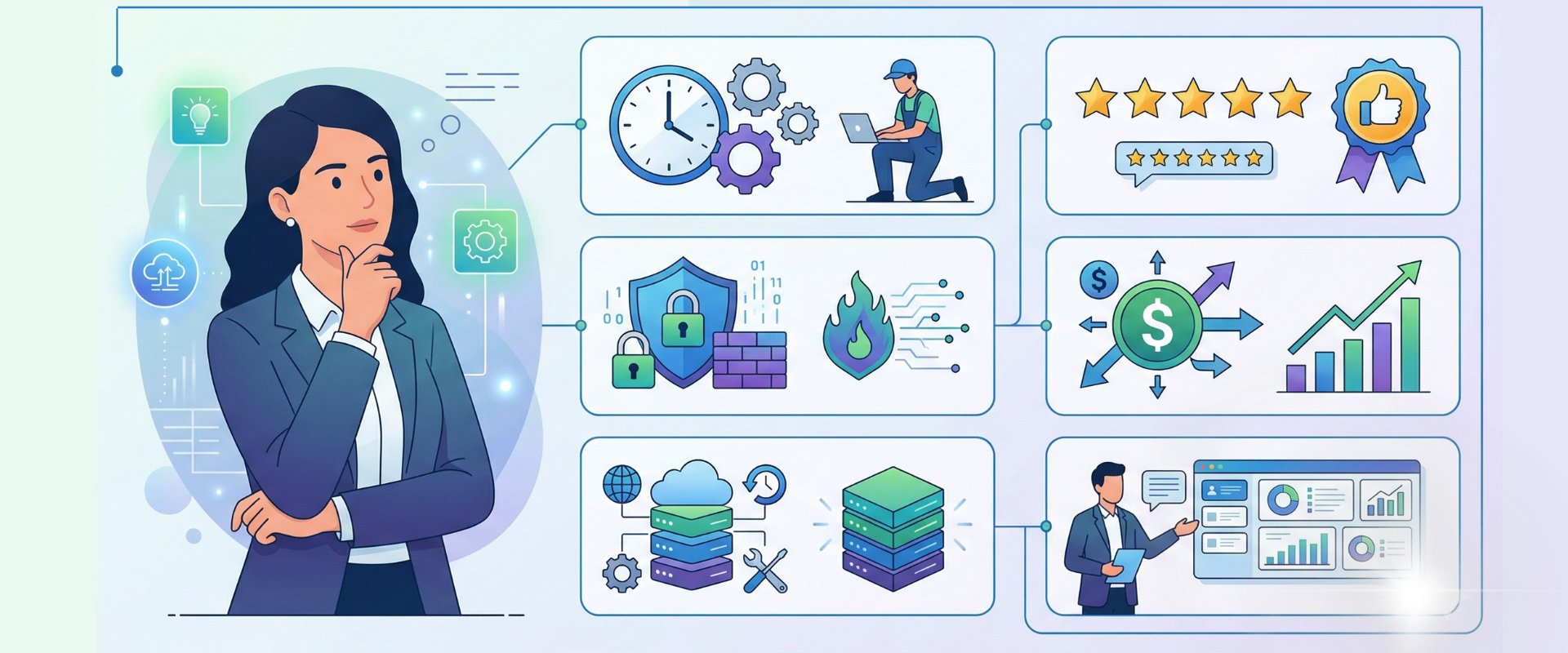
Businesswoman analyzing digital icons for IT security, cloud data, efficiency, and financial growth
By Leslie Babel March 26, 2026
Choosing an MSP? Learn the most important questions professional services firms should ask before selecting a managed IT provider.
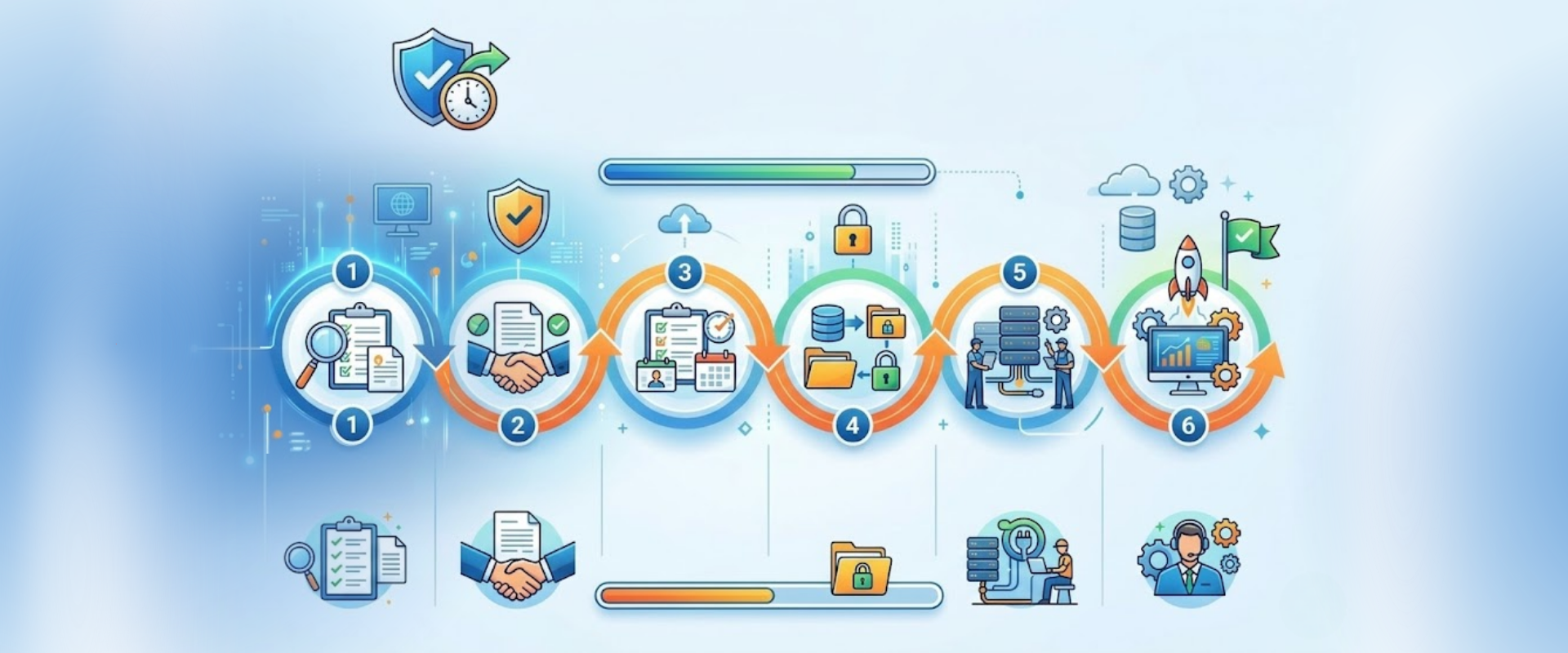
infographic on IT security, data management, and support services.
By Leslie Babel March 24, 2026
Thinking about switching MSPs? Learn how long transitions typically take and how firms can change IT providers safely with minimal disruption.
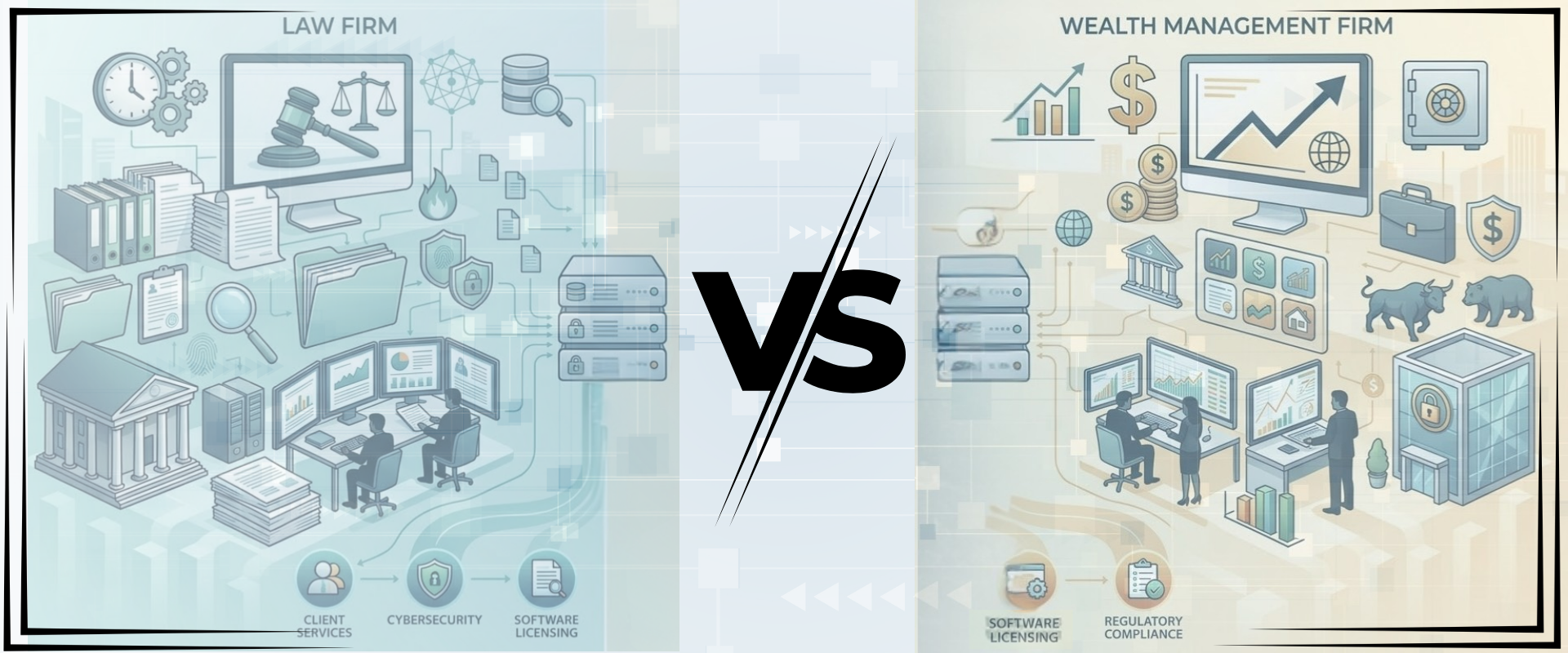
Split-screen illustration comparing IT and security infrastructure of a Law Firm vs. a Wealth Manage
By Leslie Babel March 19, 2026
How do IT costs differ between law firms and wealth management firms? Learn what drives pricing, compliance impact, and budgeting benchmarks.
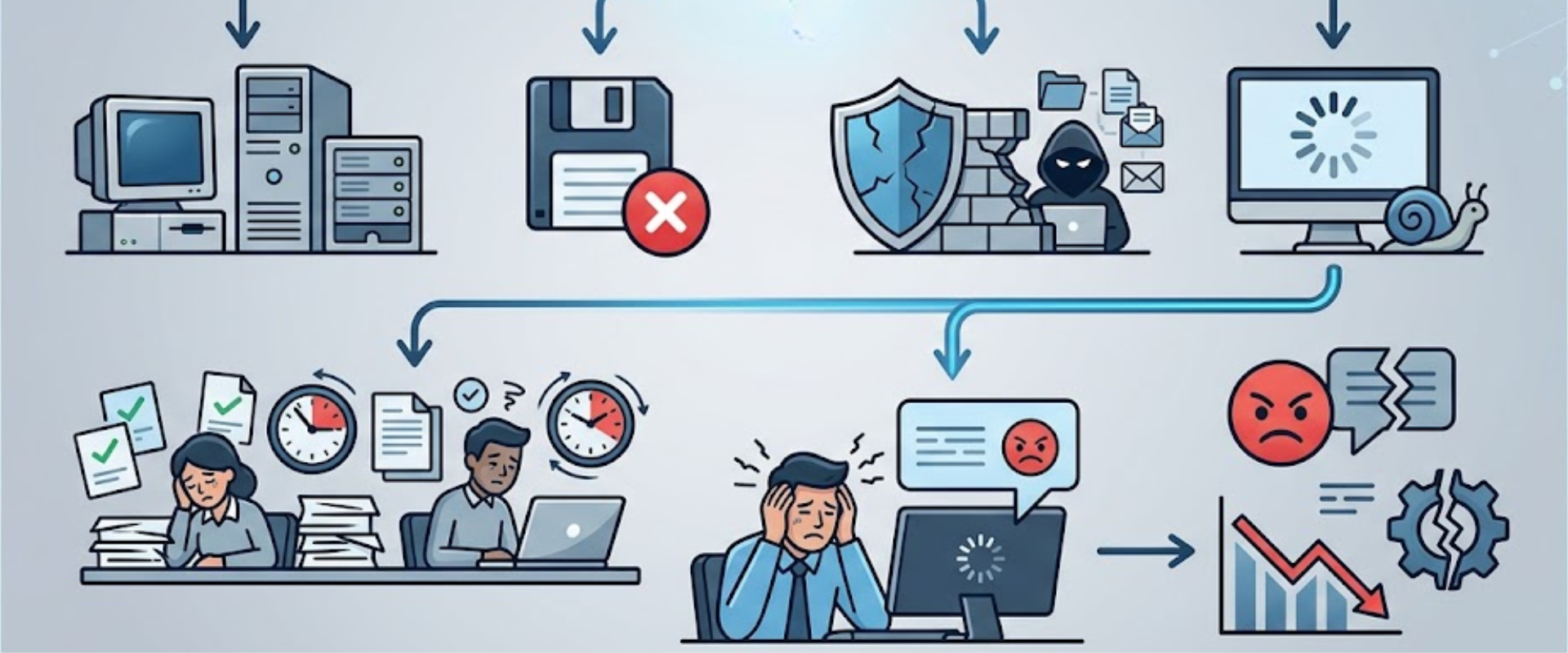
Illustration of IT issues like data loss and security breaches causing employee stress and declining
By Leslie Babel March 17, 2026
Underfunding IT may reduce costs short term but increase risk long term. Learn the hidden operational, security, and insurance impacts most firms overlook.
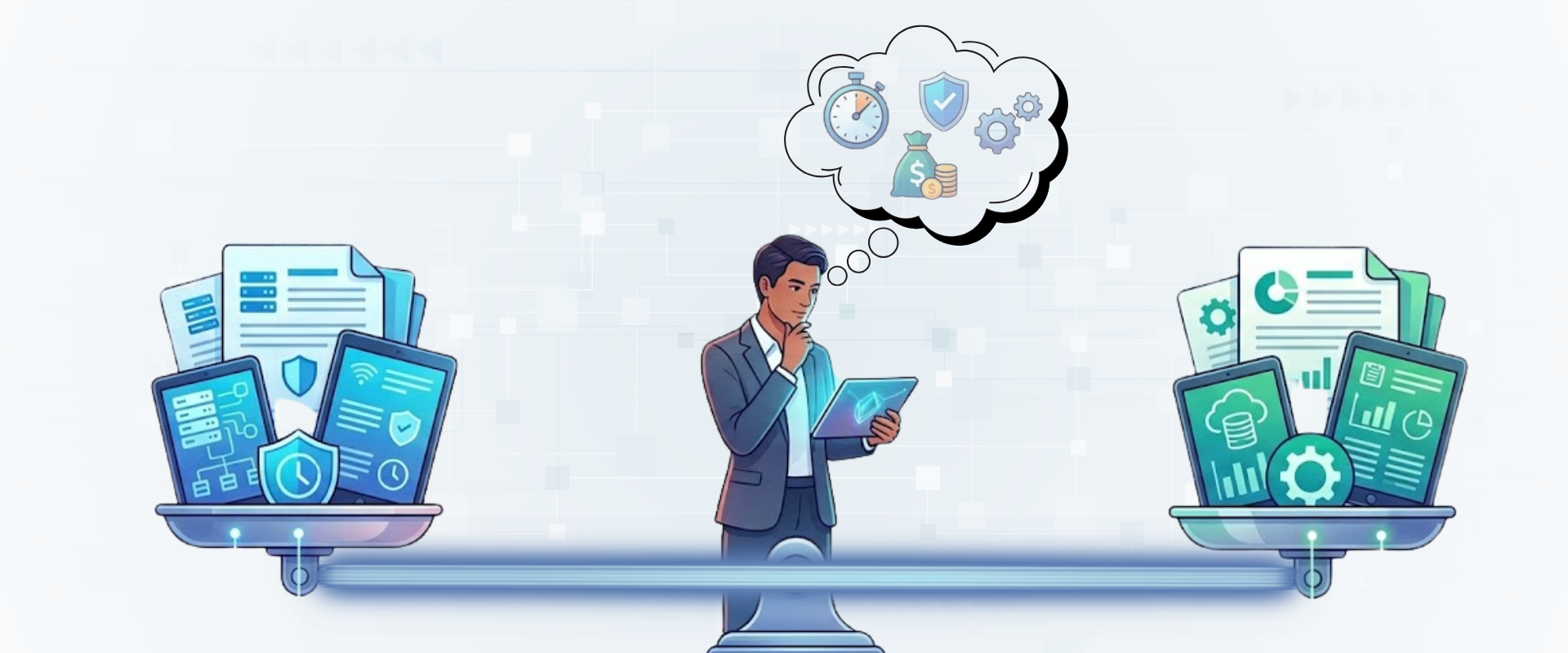
Businessman balancing scales of blue IT security icons and green data analytics icons -Comparing MSP
By Leslie Babel March 12, 2026
Comparing MSP proposals? Learn how to evaluate pricing, security inclusion, service models, and risk exposure before choosing your next IT partner.
Man unlocking a gate to transition from a dark city (contract) to a bright, cloud-connected office.
By Leslie Babel March 10, 2026
Planning to switch IT providers? Learn how to exit an MSP contract safely, secure admin access, avoid disruption, and protect your business during transition.
Hands typing on a laptop with an
By Leslie Babel March 9, 2026
AI is here and your competitors are using it. Learn how to bring AI into your firm safely with small pilots, sandboxes, and clear guardrails.
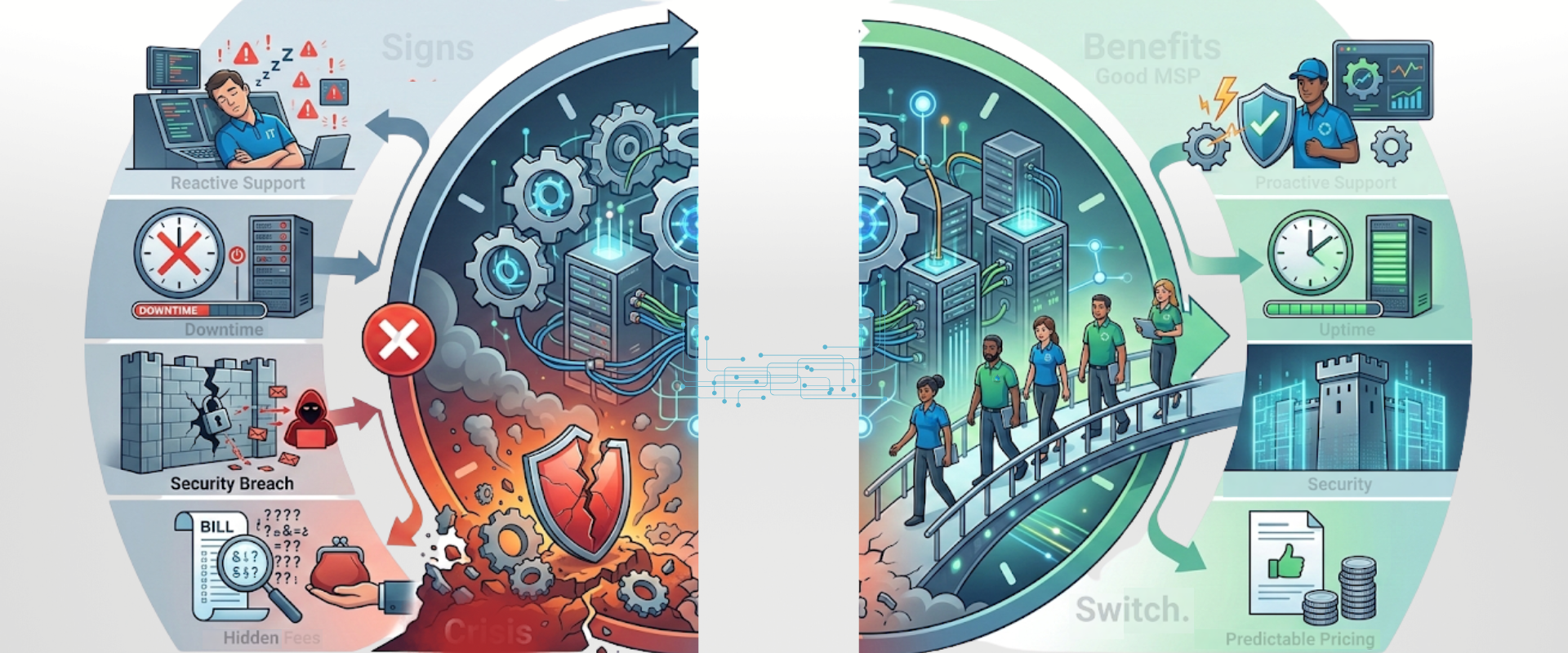
Infographic showing signs to switch your MSP before a crisis, comparing reactive downtime to proactive IT benefits.
By Leslie Babel March 5, 2026
Frustrated with recurring IT issues or unclear security? Learn the 10 signs it may be time to switch your MSP before disruption or risk escalates.
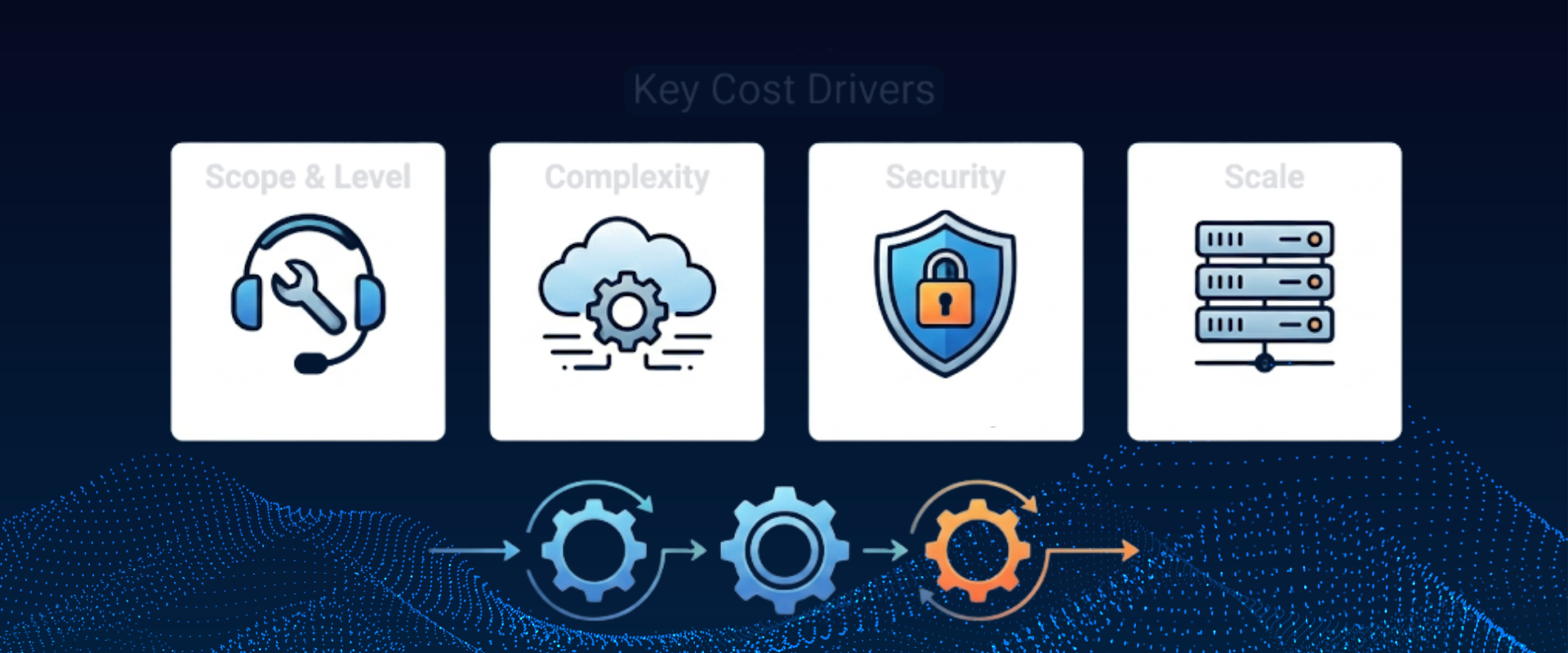
Managed IT pricing banner showing icons for Scope, Complexity, Security, and Scale on a blue background.
By Leslie Babel March 3, 2026
Why does managed IT pricing vary so much? Learn the 6 factors that drive cost differences, including security, proactive support, and service model depth.
Infographic of four IT service tiers: Essential Management, Enhanced Security, Resiliency, and Custom Solutions.
By Leslie Babel March 31, 2026
Why do some MSPs charge $150 per user while others charge $300? Learn what drives pricing differences in managed IT services.
Businesswoman analyzing digital icons for IT security, cloud data, efficiency, and financial growth
By Leslie Babel March 26, 2026
Choosing an MSP? Learn the most important questions professional services firms should ask before selecting a managed IT provider.
infographic on IT security, data management, and support services.
By Leslie Babel March 24, 2026
Thinking about switching MSPs? Learn how long transitions typically take and how firms can change IT providers safely with minimal disruption.
Split-screen illustration comparing IT and security infrastructure of a Law Firm vs. a Wealth Manage
By Leslie Babel March 19, 2026
How do IT costs differ between law firms and wealth management firms? Learn what drives pricing, compliance impact, and budgeting benchmarks.
Illustration of IT issues like data loss and security breaches causing employee stress and declining
By Leslie Babel March 17, 2026
Underfunding IT may reduce costs short term but increase risk long term. Learn the hidden operational, security, and insurance impacts most firms overlook.
Businessman balancing scales of blue IT security icons and green data analytics icons -Comparing MSP
By Leslie Babel March 12, 2026
Comparing MSP proposals? Learn how to evaluate pricing, security inclusion, service models, and risk exposure before choosing your next IT partner.
Man unlocking a gate to transition from a dark city (contract) to a bright, cloud-connected office.
By Leslie Babel March 10, 2026
Planning to switch IT providers? Learn how to exit an MSP contract safely, secure admin access, avoid disruption, and protect your business during transition.
Hands typing on a laptop with an
By Leslie Babel March 9, 2026
AI is here and your competitors are using it. Learn how to bring AI into your firm safely with small pilots, sandboxes, and clear guardrails.
Infographic showing signs to switch your MSP before a crisis, comparing reactive downtime to proactive IT benefits.
By Leslie Babel March 5, 2026
Frustrated with recurring IT issues or unclear security? Learn the 10 signs it may be time to switch your MSP before disruption or risk escalates.
Managed IT pricing banner showing icons for Scope, Complexity, Security, and Scale on a blue background.
By Leslie Babel March 3, 2026
Why does managed IT pricing vary so much? Learn the 6 factors that drive cost differences, including security, proactive support, and service model depth.