What Drives IT Costs Up (And How to Control Them) for Professional Services Firms
For professional services firms with 25–75 employees in Oakville and the GTA West, managed IT costs typically fall between:
- $175 and $275 per user per month
But many firms notice something over time:
- “Our IT costs keep increasing — why?”
In most cases, rising IT costs are not random.
They are driven by specific factors related to:
- security requirements
- business growth
- infrastructure complexity
- service model changes
Understanding what drives these costs is the first step to controlling them — without increasing risk.
If you want to estimate your current environment, you can also use our
IT Cost Calculator on the pricing page to see how your setup compares.
1 Increasing Security Requirements
The biggest driver of IT cost increases today is:
- cybersecurity
Over the past few years, baseline security has expanded to include:
- multi-factor authentication (MFA)
- endpoint detection and response (EDR)
- email security filtering
- backup monitoring and testing
- firewall management
These are no longer optional.
Why This Increases Cost
- more tools are required
- monitoring is continuous
- compliance expectations are rising
How to Control It
You don’t reduce security — you:
- standardize it
- reduces overlap
- improves efficiency
- lowers long-term cost
2 Company Growth and User Expansion
As your firm grows:
- more users are added
- more devices are managed
- more systems are connected
Even if per-user pricing stays stable:
- total cost increases
Example
30 users → $6,000/month
50 users → $10,000+/month
How to Control It
- plan growth proactively
- align IT scaling with hiring
- use cost modeling (via your pricing calculator)
3 Lack of Standardization
When environments become inconsistent:
- multiple tools are used
- configurations vary
- systems behave unpredictably
This leads to:
- higher support effort
- recurring issues
- increased cost over time
How to Control It
Standardize:
- firewall platforms
- endpoint tools
- device configurations
Standardization reduces both:
- cost
- complexity
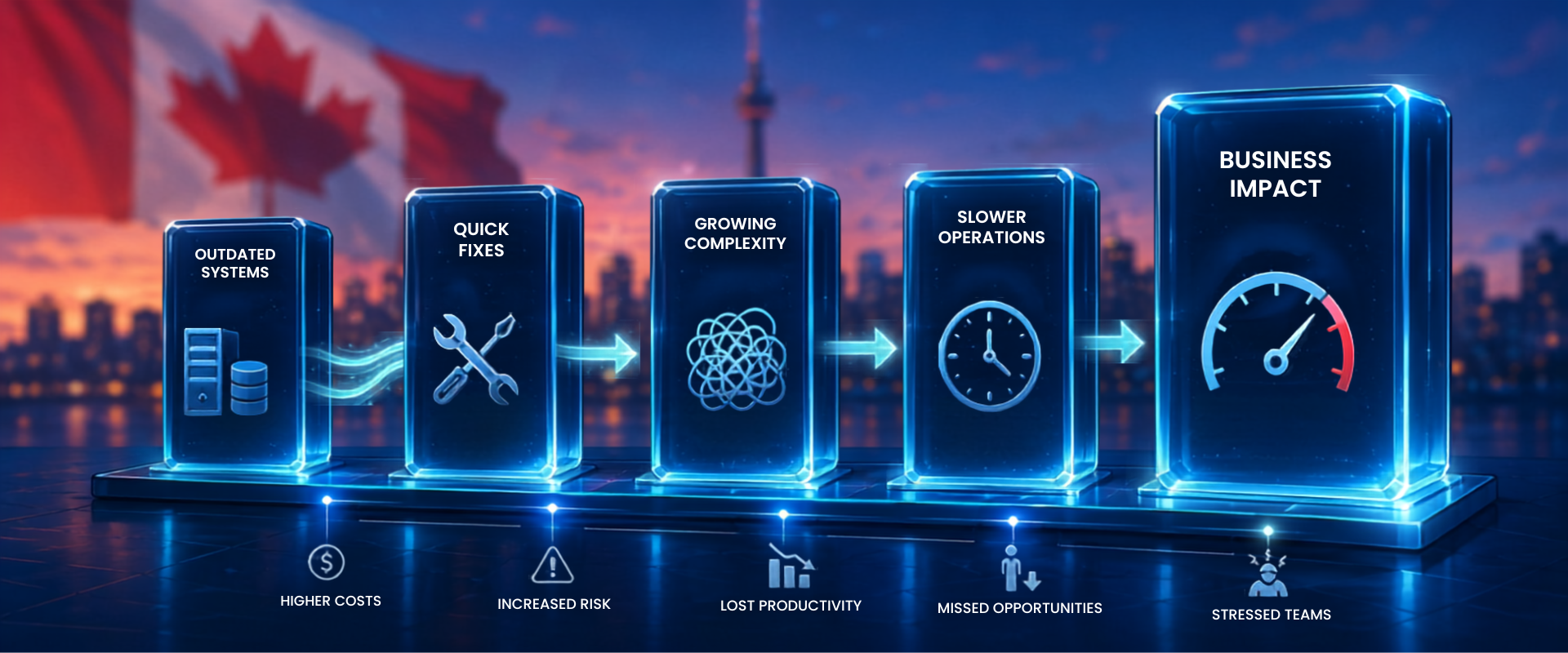
4 Reactive IT Models
Break-fix or semi-reactive models may appear cheaper, but often lead to:
- recurring issues
- emergency support costs
- inconsistent performance
Over time:
- costs become unpredictable
- total spend increases
How to Control It
Shift to a proactive model that:
- reduces incidents
- eliminates root causes
- stabilizes systems
5 Aging Infrastructure
Old hardware and outdated systems lead to:
- performance issues
- compatibility problems
- higher failure rates
This creates:
- emergency replacements
- project costs
- downtime
How to Control It
Implement lifecycle planning:
- scheduled upgrades
- predictable replacement cycles
- proactive refresh strategy
6 Hidden or Fragmented Costs
Many firms don’t realize how much they’re actually spending because costs are spread across:
- support invoices
- software subscriptions
- security tools
- project work
How to Control It
Move to a structured model where:
- costs are consolidated
- services are bundled
- pricing is predictable
Using your IT Cost Calculator can help compare fragmented vs structured cost models.
7 Increased Compliance or Industry Requirements
Certain industries (like law and wealth management) require:
- stronger data protection
- audit readiness
- documented controls
This adds:
- process overhead
- monitoring requirements
- reporting needs
How to Control It
- align IT with industry requirements early
- avoid retroactive compliance fixes
- use standardized frameworks
Real-World Example
A 50-person professional services firm saw IT costs increase from:
~$7,500/month → ~$11,000/month
Drivers included:
- adding EDR and MFA
- replacing aging infrastructure
- increasing user count
After standardizing their environment:
- recurring issues dropped ~35%
- emergency costs decreased
- IT became predictable
The increase in cost led to a decrease in operational risk.
What This Means for Your Firm
IT costs don’t increase randomly.
- security expectations
- growth
- complexity
- lack of structure
The goal is not to minimize cost.
It is to:
- control cost
- align cost with risk
- eliminate inefficiency
For most firms, the right model leads to:
- fewer surprises
- more stability
- better long-term outcomes
Not sure why your IT costs are increasing — or if they’re justified?
Leslie can review your current environment and help you:
- identify cost drivers
- compare structured vs fragmented spend
- align your IT budget with your business needs
- find opportunities to improve efficiency
Schedule a 30-minute strategy call with Leslie.
This is a practical review — not a sales conversation.
Frequently Asked Questions
Why do IT costs increase over time?
IT costs typically increase due to higher security requirements, company growth, and increasing infrastructure complexity.
Can IT costs be reduced without increasing risk?
Costs can be controlled through standardization, proactive management, and eliminating inefficiencies rather than cutting critical services.
What is the biggest driver of IT cost increases?
Cybersecurity is currently the largest driver, as more tools and monitoring are required to protect business environments.
How can I estimate if my IT costs are reasonable?
Using a structured cost model or calculator helps compare your current spend against typical pricing benchmarks.
Recent Posts