Why More Canadian Businesses Are Re-Evaluating Their Technology Stack
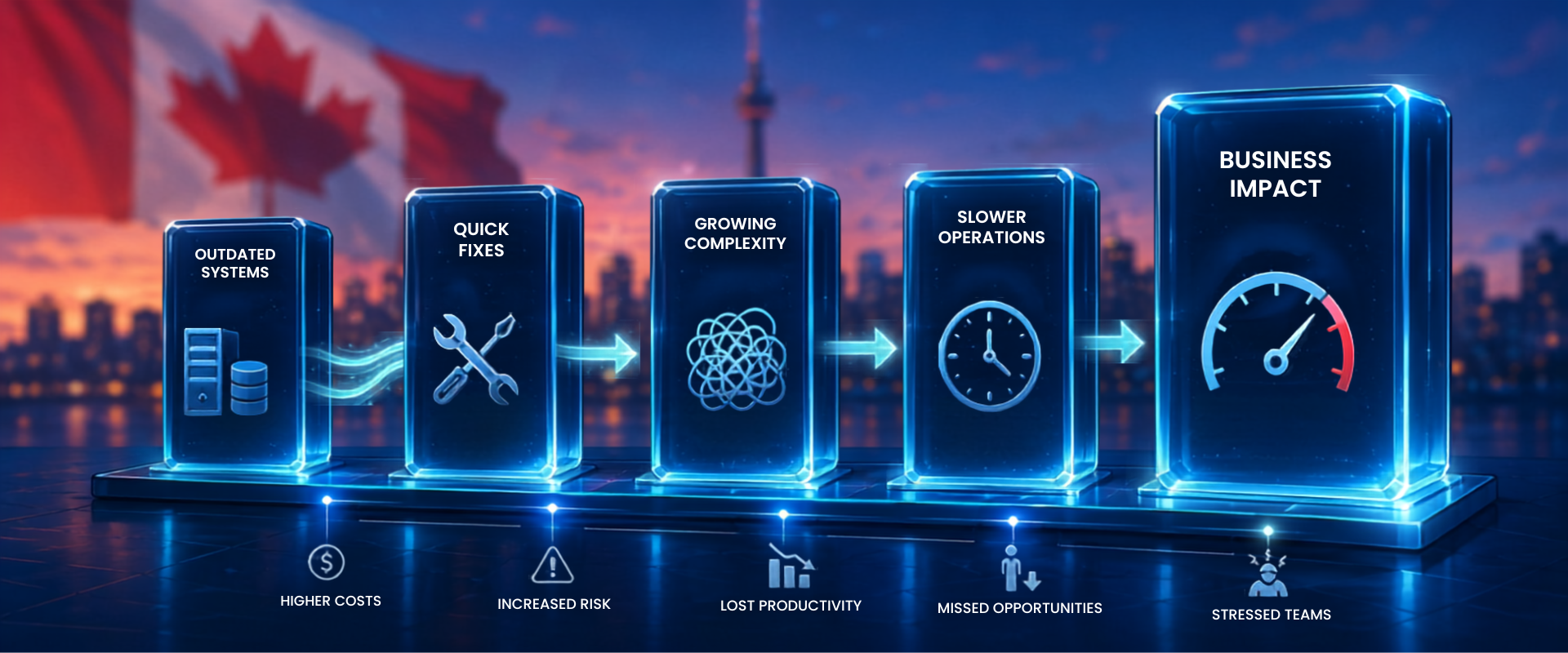
Over the past few years, many Canadian businesses have quietly begun rethinking the technology they rely on every day.
This shift is not driven by trends alone.
For professional services firms in Oakville, Burlington, Hamilton, Mississauga, and across Canada, the pressure is coming from several directions at once:
- rising software costs
- increasing cybersecurity requirements
- operational complexity
- vendor sprawl
- support challenges
- uncertainty around data residency and compliance
As a result, many organizations are asking a broader question:
- “Does our current technology stack still make sense for the business we are today?”
This is not just an IT discussion anymore.
It is becoming:
- an operational and strategic business decision.
1 Rising Costs Are Forcing Businesses to Re-Evaluate
Over the last several years, many businesses have seen significant increases in:
- software licensing
- cloud subscriptions
- cybersecurity tools
- support costs
In many environments, costs have accumulated gradually through:
- overlapping tools
- duplicate platforms
- disconnected systems
The result is often:
- higher spend with little improvement in operational simplicity.
What Businesses Are Realizing
Many organizations are beginning to ask:
- Are we paying for tools we barely use?
- Are multiple platforms solving the same problem?
- Is our environment becoming harder to manage?
Technology growth without structure often creates:
- operational friction.
2 Vendor Sprawl Is Creating Complexity
Many businesses now operate with:
- multiple cloud platforms
- separate communication tools
- overlapping security vendors
- disconnected file-sharing systems
While each decision may have made sense individually, the overall environment can become difficult to manage.
Why This Matters
Complexity increases:
- support effort
- troubleshooting time
- security risk
- employee confusion
The more fragmented the environment becomes:
- the harder it is to maintain consistency.
3 Cybersecurity Expectations Have Changed
What was considered “adequate” security five years ago often no longer meets current expectations.
Businesses are now expected to implement:
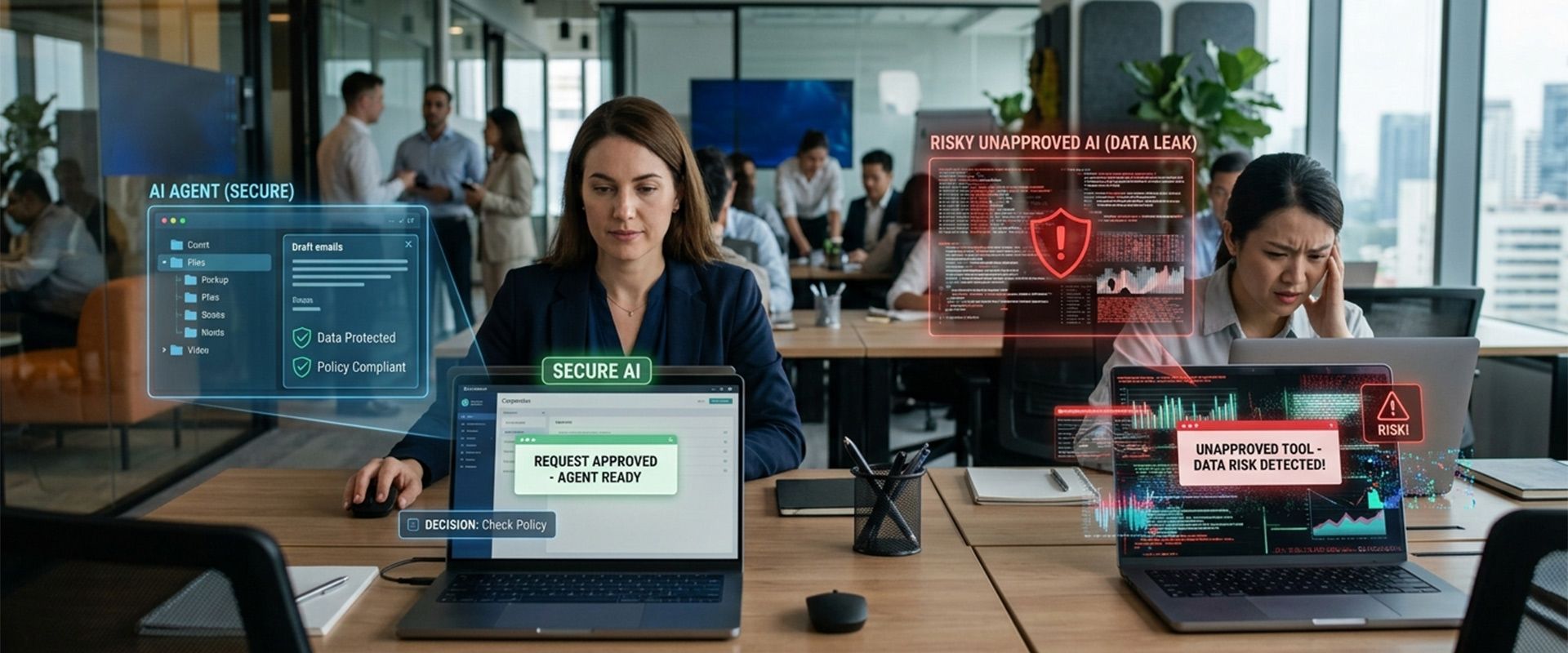
- multi-factor authentication (MFA)
- endpoint detection and response (EDR)
- stronger backup validation
- security monitoring
- access controls
This creates pressure to evaluate whether existing systems still align with current security requirements.
What Businesses Are Realizing
Older or fragmented environments often:
- struggle to support modern security controls
- create visibility gaps
- increase operational risk
Security is no longer separate from business operations.
4 Businesses Want Fewer Operational Headaches
One of the strongest trends among professional services firms is:
- simplification
Many organizations are less interested in:
- adding more technology
and more interested in:
- reducing operational friction
This includes:
- fewer recurring issues
- more predictable systems
- better integration between tools
- easier support experiences
Why This Matters
Technology should help businesses operate more smoothly — not create additional management burden.
5 Support and Accountability Matter More Than Ever
Businesses are increasingly evaluating:
- responsiveness
- operational accountability
- vendor coordination
- strategic guidance
When environments involve too many disconnected vendors, accountability becomes unclear.
What Businesses Are Looking For
Organizations increasingly prefer:
- structured environments
- standardized systems
- centralized visibility
This improves:
- support consistency
- operational predictability
- long-term planning
6 Canadian Businesses Are Thinking More About Data Residency and Vendor Dependence
For some organizations, especially:
- law firms
- wealth management firms
- regulated industries
questions around:
- data residency
- privacy
- vendor jurisdiction
- operational dependence
are becoming more important.
This does not necessarily mean businesses only want Canadian vendors.
But it does mean they are:
- evaluating technology decisions more carefully.
7 Standardization Is Becoming a Competitive Advantage
One of the biggest operational shifts occurring right now is:
- moving from fragmented environments → standardized environments
Businesses are increasingly recognizing that standardization:
- reduces recurring issues
- improves security consistency
- simplifies support
- lowers long-term operational overhead
This is especially important as environments grow more complex.
Practical Example
A 50-person professional services firm had gradually accumulated:
- multiple communication platforms
- overlapping file-sharing tools
- inconsistent endpoint protection
- aging infrastructure
Over time:
- support became more difficult
- user frustration increased
- visibility declined
After consolidating and standardizing systems:
Within ~6 months:
- recurring issues declined
- support became more predictable
- security visibility improved
- operational complexity decreased
The biggest improvement was not dramatic innovation.
It was:
- reduced friction.
What This Means for Canadian Businesses
Many businesses are no longer asking:
- “What’s the newest technology?”
Instead, they are asking:
- “What technology environment will create the most stability, clarity, and operational efficiency?”
That is a very different conversation.
And in many cases, it leads businesses toward:
- simplification
- consolidation
- proactive management
- operational consistency
Leslie can help you:
- identify operational friction points
- evaluate vendor sprawl
- improve standardization
- align technology decisions with long-term business goals
Schedule a 30-minute strategy call with Leslie.
This is a strategic operational discussion — not a sales pitch.
Frequently Asked Questions
Why are businesses re-evaluating their technology stack?
Many businesses are responding to rising software costs, security requirements, operational complexity, and vendor sprawl.
What is vendor sprawl?
Vendor sprawl occurs when businesses rely on too many disconnected tools and providers, increasing complexity and support challenges.
Why does standardization matter in IT?
Standardization improves operational consistency, reduces recurring issues, and strengthens security management.
Are Canadian businesses becoming more concerned about data residency?
Yes. Many organizations are increasingly evaluating privacy, vendor jurisdiction, and where business data is stored.
Recent Posts